I’ve been thinking about how much more teachers bring to a classroom than the subject they teach.
We don’t leave our other lives at the door.
For me, a lot of what I bring comes from being a knitting designer and an unconventional published writer. I haven’t published a book yet, but my knitting patterns have been published, sold, and shared. I’ve written for my own blog and been paid by blogs, magazines, and other publications to write about knitting, teaching, parenting, and other things I care about. I write the stories and descriptions that go with my designs, market my work, and sell it.
That experience shapes how I teach writing. Yet, my former/current experience as a teacher shapes how I write.
I absolutely want my fifth graders to do well on their writing assessments. I care about data. I care about scores. I want my students to know how to organize their ideas, develop their thinking, choose their words carefully, and write for an audience.
But I also know that a score is only one picture of a writer.
I know this because I write for a living. My writing has a voice and a style that are recognizable as mine. People read it, use it, and pay me for it. Does all of my writing fit neatly into a fifth-grade rubric? Probably not.
And yet, here I am, writing.
That doesn’t make the rubric unimportant. Quite the opposite. It gives me another perspective on what the rubric can and cannot tell us. In the real world, writing has an audience. It has to communicate, connect, teach, persuade, entertain, or simply make someone want to keep reading.
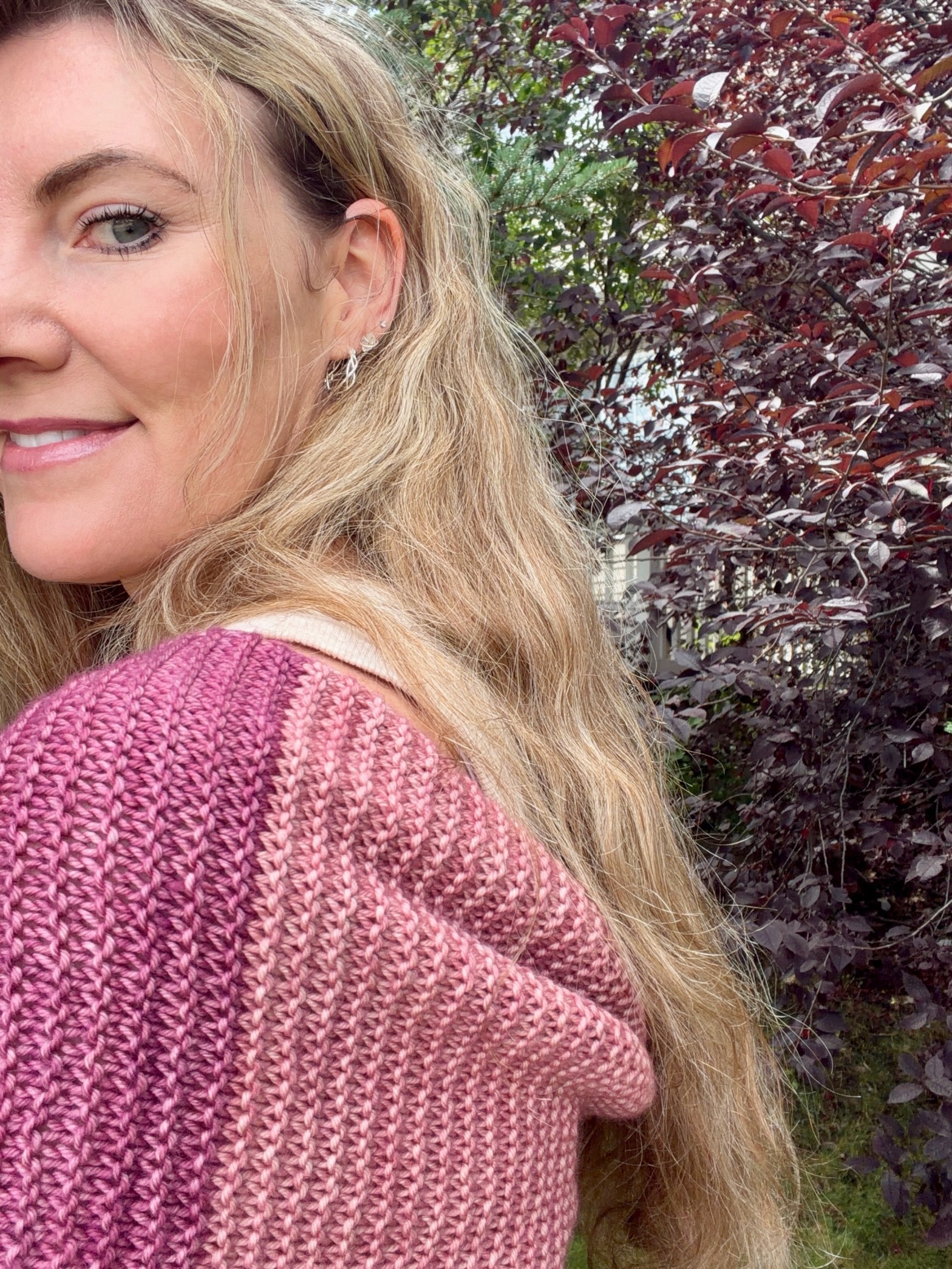
My knitting brings another piece of the real world into my classroom.
Knitwear design is basically engineering with string. When I grade a design across 10 sizes, I use algebra, proportions, measurements, stitch counts, row counts, and problem solving. The numbers have to work, but they also have to create something that fits an actual human body.
So when a student asks, “When am I ever going to use this?” I have a real answer.
I use algebra all the time. And I use the same kind of mathematical thinking an engineer might use when figuring out how to build a bridge. The materials are different, but the thinking is surprisingly similar: measurements, relationships, variables, constraints, and solving for what you don’t know.
And then I look around at the teachers I work with and realize that we all bring something different.
There is the coach who knows how to break a skill into steps, give useful feedback, build confidence, and help a kid keep going when something is hard.
There is the artist who sees possibilities and knows how to turn an idea into something real.
There is the musician who understands rhythm, timing, performance, and emotion.
There is the voracious reader who knows books so well that they can often find the one that will reach a particular child.
There is the teacher with a background in psychology or counseling who notices things others might miss and looks for what is underneath a behavior.
And there is the teacher whose gift is organization. The one who can walk into a mountain of information, create a system, make the priorities clear, and somehow have everything color-coded. That isn’t just being organized. That is knowing how to make complexity manageable.
Some of us are a mix of all of these things.
I value that more than I probably say.
Some of the things I appreciate most about my co-teachers are the things I don’t naturally bring myself. I learn from how they think, how they solve problems, how they connect with kids, and how they see things I might not see.
And maybe that is true beyond our school too.
Our society doesn’t need everyone to be good at the same things. We need writers and engineers, artists and coaches, musicians and organizers, scientists and counselors, designers and entrepreneurs. We need people who can analyze a problem and people who can imagine a different possibility.
So yes, I want my students to score well. I want them to learn the standards, demonstrate their skills, and feel proud of what they can do.
I just don’t want a score to become the whole story.
There is more to a writer than a writing score.
There is more to a mathematician than a math score.
And there is certainly more to a child than any assessment can capture.
Maybe that is one of the things we bring with us, too: the ability to see the whole person.
And maybe that is why I value having teachers around me who bring so many different ways of seeing.


